
Erich Neumann
23 January 1905 – 5 November 1960
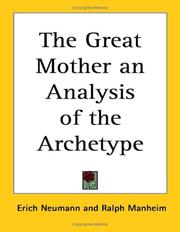
**Source: Wikipedia:** **Erich Neumann** (Hebrew: אריך נוימן; 23 January 1905 – 5 November 1960),[2] was a psychologist, philosopher, writer, and student of ***Carl Jung***. **Career** Neumann was born in Berlin to a Jewish family.[1] He received his PhD in Philosophy from the University of Erlangen-Nuremberg in 1927 and then continued to study medicine at the University of Berlin, where he acquired his first degree in medicine in 1933. In 1934 Neumann and his wife Julia, who had been Zionists since they were teenagers, moved to Tel Aviv.[1] For many years, he regularly returned to Zürich, Switzerland to give lectures at the C. G. Jung Institute. He also lectured frequently in England, France and the Netherlands, and was a member of the International Association for Analytical Psychology and president of the Israel Association of Analytical Psychologists. He practiced analytical psychology in Tel Aviv from 1934 until his death from kidney cancer in 1960.[1] **Contributions** Neumann contributed to the field of developmental psychology and the psychology of consciousness and creativity. He had a theoretical and philosophical approach to analysis, contrasting with the more clinical concern in England and the United States. His most valuable contribution to psychology was the empirical concept of "centroversion", a synthesis of extra- and introversion. However, he is best known for his theory of feminine development, a theory formulated in numerous publications, most notably The Great Mother. His works also elucidate the way **mythology** throughout history *reveals* aspects of the ***development of consciousness*** that are parallel in both the **individual** and **society** as a whole. **Bibliography** --Tiefenpsychologie und neue Ethik. Rhein, Zürich 1949 --Ursprungsgeschichte des Bewusstseins. Mit einem Vorwort von C.G. Jung. Rascher, Zürich, 1949 --Amor und Psyche. 1952 --Umkreisung der Mitte. 3 Bde., 1953/54 --Die große Mutter. Der Archetyp des großen Weiblichen. Rhein, Zürich 1956 --Der schöpferische Mensch. 1959 --Die archetypische Welt Henry Moores. 1961, posthum veröffentlicht --Krise und Erneuerung. 1961, posthum veröffentlicht --Das Kind. Struktur und Dynamik der werdenden Persönlichkeit. 1963, posthum 1980 veröffentlicht --Jacob et Esaü: L'archétype des frères ennemis, un symbole du judaïsme, posthum 2015. French traduction of Jacob and Esau. Reflection on the Brother Motif, (c) Chiron Publications. **Wikipedia**: https://en.wikipedia.org/wiki/Erich_Neumann_(psychologist) Jordan B. Peterson claims Neumann is one of the best analysts and distillers of Carl Jung's works.
Books
- Kunst und schöpferisches Unbewusstes
- Essays of Erich Neumann
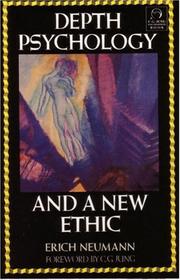
- Tiefenpsychologie und neue Ethik
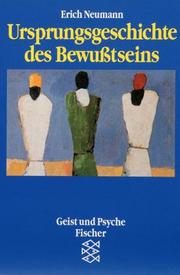
- Ursprungsgeschichte des Bewusstseins
- אדם ומשמעות
- Johann Arnold Kanne
- Kann eine Ehefrau von ihrem Ehemann Rückzahlung eines ihm vor der Eheschliessung gewährten Darlehns während bestehender Ehe fordern?
- Eine Auslese seltner Tuberkulose Fälle
- Die Jugendgerichtsbarkeit unt. bes. Berücks. d. amerikan. Rechts
- Werk Thomas Manns
- Zur Psychologie des Weiblichen
- Der Wechselbereicherungsanspruch
- Art and the Creative Unconscious
- Essays. English. Selections. (Neumann, Erich)
- The fear of the feminine and other essays on feminine psychology
- Krise und Erneuerung
- Mashber ve-hitḥadshut
- Ursprungsgeschichte des Bewußtseins. ( Geist und Psyche)
- Creative Man
- La Psicologia Del Femminile
- Analytical Psychology in Exile
- Kreativität des Unbewussten
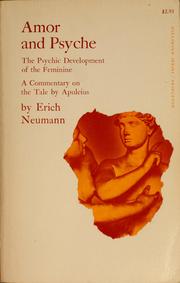
- Amor and Psyche
- Roots of Jewish Consciousness
- Zur Kasuistik der Prostatahypertrophie
- Experimentelle Beiträge zur Frage des Diphtherietoxinnachweises im menschlichen Blutserum
- Los dioses ocultos
- Die literarischen Grundlagen zu den phonatorischen Stauspannübungen
- Eros e Psique
- Umkreisung der Mitte
- Jacob and Esau
- Die Psyche als Ort der Gestaltung
- Das Kind
- Ethiek voor de toekomst
- Grosse Mutter
- Kulturentwicklung und Religion
- The place of creation
- Der schöpferische Mensch
- Archetypische Welt Henry Moores








Author data: Open Library