
David Talbot Rice
11 July 1903 – 12 March 1972
David Talbot Rice CBE was an English archaeologist and art historian. His name is sometimes written as Talbot-Rice. His parents were Charles Henry Talbot-Rice and Cecily Mary Talbot-Rice (née Lloyd). Born in Rugby and brought up in Gloucestershire, Talbot Rice was educated at Eton prior to reading archaeology and anthropology at Christ Church, Oxford. At Oxford his circle of friends included Evelyn Waugh and Harold Acton as well as his future wife (Elena) Tamara Abelson (1904–1993) a Russian émigré whom he was to marry in 1927. This group allegedly formed the original for Waugh's *Brideshead Revisited*. Elena was also an art historian, writing on Byzantine and Central Asian art, and spent much time travelling abroad with him on archaeological digs. In 1925 while he was still an undergraduate, Talbot Rice became a staff member at the Oxford Field Museum's archaeological excavation in Kish, Iraq. He was to use this experience by incorporating some of his findings when completing his B.Sc. degree gained in 1927. Developing a passion for all things Byzantine, Talbot Rice joined the expeditions of the British Academy in Constantinople (now Istanbul) in 1927–32 and 1952–54. In 1928, for example, he visited Trebizond (now Trabzon), which would lead to his monograph on the subject being published in 1936. Talbot Rice's fieldwork continued with expeditions to Cyprus, Asia Minor, Iraq and Iran. His academic career took off in 1934 when he was appointed to the Watson Gordon Chair of Fine Art at the University of Edinburgh, Scotland, a post he held until his death in 1972. In 1937 he gave the Ilchester Lecture, later published as *The Beginnings of Russian Icon Painting*. World War Two interrupted his academic pursuits when he was called up as head of the Near East Section of Military Intelligence (MI3b), which was responsible for Eastern Europe including Yugoslavia but excluding Russia and Scandinavia. He later transferred to the Special Operations Executive serving in North Africa and Italy with the rank of lieutenant-colonel. He was appointed Member of the British Empire in 1943. When peacetime resumed in 1945, Talbot Rice returned to his work in Edinburgh. From 1952-54, he led the excavations of the Great Palace of Constantinople in Istanbul, Turkey, and he was later involved in the uncovering and restoration of the Byzantine frescos in the Hagia Sophia in Trabzon. In 1958 he took responsibility for a major exhibition of Byzantine art for the Edinburgh International Festival. As well as continuing with research, teaching, and the responsibilities associated with his professorship, Talbot Rice served on various national committees associated with the arts, including the Arts Council, of which he was a member from 1963-68. He was an honorary member of the Royal Scottish Academy and a senior trustee of National Galleries Scotland. From 1967-71 Talbot Rice served as vice principal of the University of Edinburgh. His ambition to establish an arts centre in the university was realised posthumously in 1975 by his successor Professor Giles Henry Robertson when the Talbot Rice Gallery was founded and named after him. Source: [Wikipedia](https://en.wikipedia.org/wiki/David_Talbot_Rice)
Books
- Masterpieces of Byzantine art
- Domēnikos Theotokopoulos krēs epoiei
- al-Fann al-Islāmī
- The scope of art history
- Byzantine Frescoes
- Austria
- Icons
- Studies in memory of David Talbot Rice
- Historia de Las Civilizaciones 5
- Second report upon the excavations carried out in and near the Hippodrome of Constantinople in 1928
- The background of art
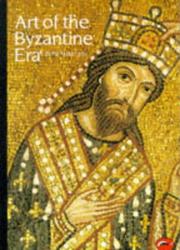
- Art of the Byzantine era
- Great Centres of Art COPENHAGEN
- Birth of Western Painting
- Yugoslavia - mediaeval frescoes
- The University portraits
- Byzantine Painting at Trebizond
- Russian mediaeval architecture
- The Byzantine element in late Saxon art
- The church of Haghia Sophia at Trebizond
- Affreschi medioevali in jugoslavia
- Byzantine painting and developments in the West before A. D. 1200
- The Wolves - 1st US Edition/1st Printing
- Museums of Budapest
- Masterpieces of Byzantine art
- Art of the Byzantine Era
- Byzantine icons
- The icons of Cyprus
- Iranian influences in the Caucasus
- Copenhagen
- The Oxford history of English art
- Byzantine frescoes from Yugoslav churches
- From prehistory to the thirteenth century
- The Great palace of the Byzantine emperors, second report
- Stockholm (Great centres of art)
- The beginnings of Russian icon painting
- Byzantine glazed pottery
- Constantinople
- Icons and their dating
- World Architecture




Author data: Open Library