Michael D. Bordo
Books
- Getting Global Monetary Policy on Track
- Monetary Regimes in Transition
- Central Banks at a Crossroads
- Globalization in Historical Perspective
- Credibility and the International Monetary Regime
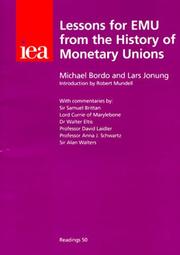
- Lessons for EMU from the history of monetary unions
- Globalization in historical perspective
- Credibility and the International Monetary Regime
- The Gold Standard as a Rule
- Transferring wealth and power from the old to the new world
- The Great Inflation
- A Comparison of the Stability and Efficiency of the Canadian and American Banking Systems 1870-1925
- Some Historical Evidence 1870-1933 on the Impact and International Transmission of Financial Crises
- Why did the Bank of Canada Emerge in 1935?
- The Stochastic Properties of Velocity
- The Lender of Last Resort
- A Small Open Economy in Depression
- France and the Bretton Woods International Monetary System
- Getting Pegged
- Why Clashes Between Internal and External Stability Goals End in Currency Crises, 1797-1994
- The Adam Klug Memorial Lecture: Haberler versus Nurkse
- How "Original Sin" was Overcome
- Why did the Bank of Canada emerge in 1935?
- Money Growth Variability and Money Supply Interdependence Under InterestRate Control
- Explorations in Monetary History
- The Global Velocity Curve 1952-1982
- The ECU - An Imaginary or Embryonic Form of Money
- Credible Commitment and Exchange Rate Stability
- The Contribution of a Monetary History of the United States
- Money Stock Targeting, Base Drift and Price-Level Predictability
- The Long-Run Behavior of Velocity
- British and French Finance During the Napoleonic Wars
- What has Foreign Market Intervention Since the Plaza Agreement Accomplished?
- Money versus Credit Rationing
- The Bretton Woods International Monetary System
- Labor Productivity During the Great Depression
- Could Stable Money Have Averted The Great Contraction?
- A Comparison of the United States and Canadian Banking Systems in the Twentieth Century
- Rules, Discretion, and Central Bank Independence
- The Specie Standard as a Contingent Rule
- The Gold Standard as a `Good Housekeeping Seal of Approval'
- Violations of the `Rules of the Game' and the Credibility of the Classical Gold Standard, 1880-1914
- The Future of EMU
- Core, Periphery, Exchange Rate Regimes, and Globalization
- Why didn't France follow the British Stabilization after World War One?
- Gold, Fiat Money, and Price Stability
- The Historical Origins of U.S. Exchange Market Intervention Policy
- Retrospective on the Bretton Woods System, a
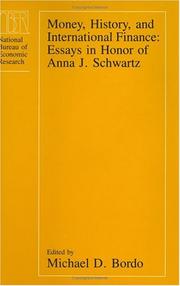
- Money, history, and international finance



Author data: Open Library