Carliss Y. Baldwin
Books
- Where do transactions come from?
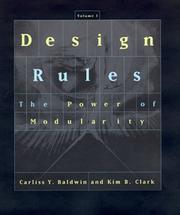
- Design rules
- Asset heterogeneity and failing institutions
- Inflation, discrete replacement and the choice of asset lives
- The architecture of cooperation
- Competition among hidden modules and industry evolution
- Design rules
- Modularity and organizations
- Selling Conrail
- Designs and design architecture
- Modularity in the design of complex engineering systems
- The pricing and profitability of modular clusters
- The value of augmenting and excluding
- Design options and design evolution
- What is modularity?
- Where do transactions come from?
- Creating System/360, the first modular computer family
- The impact of modularity on intellectual property and value appropriation
- Competition in modular clusters
- How user innovations become commercial products
- Time inconsistency in capital budgeting
- The capital factor
- Productivity and labor unions
- The option value of modularity in design
- Hidden structure
- The value of modularity
- Architectural innovation and dynamic competition
- The architecture of platforms
- When open architecture beats closed
- Strategic capital budgeting
- Capital budgeting
- Evaluation of government subsidies to large scale energy projects
- Control of indirect financial subsidies in Canada's budget
- The fundamental theorem of design economics
- Modularity and intellectual property protection
- All modules are not created equal
- Enterprise design
- The origins of modularity in early computer designs
- Institutional forms, part 1
- Bottlenecks, modules and dynamic architectural capabilities
- Modularity, transactions, and the boundaries of firms
Author data: Open Library