T. J. Hatton
Books
- International Migration in the Long-Run
- Mass Migration, Commodity Market Integration and Real Wage Convergence
- After the famine
- The age of mass migration
- The British labour market 1855-1939
- Demand, supply and economic policy during the 1930s
- What drove the mass migrations from Europe in the late nineteenth century?
- Catchment Scale Recharge Modelling - Part 4
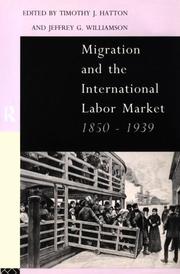
- Migration and the international labor market, 1850-1939
- The British labour market in different economic eras 1857-1938
- Demographic and economic pressure on emigration out of Africa
- Female labour force participation in interwar Britain
- Household labour supply and women's work in interwar Britain
- Structural aspects of unemployment between the wars
- What drove the mass migrations from Europe in the late nineteenth century?
- Late-comers to mass emigration
- European asylum policy
- The impact of immigration on American labor markets prior to the quotas
- A model of UK emigration, 1870-1913
- The union wage effect in late nineteenth century Britain
- The analysis of unemployment in interwar Britain
- Labour supply and demand 1924 - 1939
- Unemployment benefits and the macroeconomics of the interwar labour market
- Unemployment in the 1930's and the "Keynesian solution"
- Female labour force participation
- A dual policy paradox
- Immigrants assimilate as communities, not just as individuals
- Migration, migrants and policy in the United Kingdom
- International migration in the long-run
- International migration and world development
- Seeking Asylum
- Eighteenth-century British trade
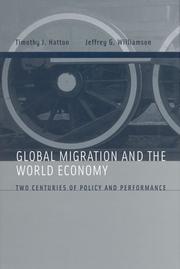
- Global migration and the world economy
- Unemployment in Britain between the world wars
- The union wage effect
- What determines immigration's impact?
- Employment functions for U.K. industries between the wars
- Rational expectations and labour market equilibrium in Britain 1855-1913
- Unemployment and the labour market in the interwar period
- Vacancies and unemployment in the 1920's

Author data: Open Library