
Rosemarie Garland-Thomson
18 October 1946
Rosemarie Garland-Thomson is a disability justice and culture thought leader, bioethicist, teacher, and humanities scholar. Her 2016 editorial, “Becoming Disabled,” was the inauguralarticle in the ongoing weekly series in the *New York Times* about disability by people living with disabilities. She is a professor of English and bioethics at Emory University, where she teaches disability studies, bioethics, American literature and culture, and feminist theory. Her work develops the field of critical disability studies in the health humanities to bring forward disability access, inclusion, and identity to a broad range of institutions and communities. She is co-editor of ***About Us: Essays from the New York Times about Disability by People with Disabilities*** and the author of ***Staring: How We Look*** and several other books. **Photo** Visual description: this professional headshot shows RGT as a mature, average-sized white woman with pale skin, silver hair, black and white glasses, in a black jacket and dark pearls, posed before a white fireplace mantle decked with a black and a red vase. ()
Books
- About Us
- Feminist Disability Studies
- Manifestos for the Future of Critical Disability Studies
- Interdisciplinary Approaches to Disability
- Manifestos for the Future of Critical Disability Studies - Volume 1
- Imaging and Imagining Illness
- Working Against Odds
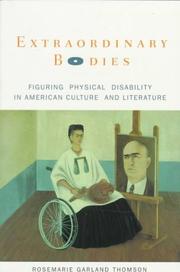
- Extraordinary bodies
- Freak Inheritance
- Disability studies
- Staring
- Aberrant bodies
- Art of Flourishing
- Reshaping, re-thinking, re-defining (Barbara Waxman Fiduccia papers on women and girls with disabilities)




Author data: Open Library