
Chiswick Press
This private printing press was a forerunner of the private presses started by William Morris and others later in the 19th century. It was founded by Charles Whittingham (1767-1840) who had acquired a patent for extracting tar from old ropes. The hemp was pulped to produce a paper with a strong and silky finish while the tar was used to produce printing ink. In 1810 Whittingham took out a lease on High House (demolished 1880) in Chiswick Mall which he equipped as a printing works with a paper mill next door. The riverside location was probably selected because of its proximity to the draw dock where barge loads of old ships' ropes from London and other dockyards could be unloaded. In 1818 Chiswick Press moved to larger premises at College House, Chiswick Mall. After Whittingham's death his nephew, Charles Whittingham (1797-1876) took over the business and continued printing at Chiswick until 1852 when he moved the Chiswick Press to its other office in Tooks Court, Chancery Lane. Chiswick Press specialised in the production of small dainty volumes, noted for their woodcut engravings. The books were printed by hand on iron presses (one of the presses belonging to the Chiswick Press is now in Gunnersbury Park Museum). The Whittinghams not only pioneered a movement towards finely produced books at reasonable prices but also to smaller-sized books which were easy to fit in a pocket. They thus posed a threat to other publishers of the time which favoured big books at big prices.
Books
- The ballad of Reading Gaol
- Autographs of the rulers of France
- The game of ombre
- An ode for music
- Photographs of fifteenth-century types
- A call to national service ; An appeal to America ; Cry of the homeless
- The tempest
- Maxims and opinions
- Cats (Les chats)
- The dramatic works of William Shakspeare
- The life of Swinburne
- Jeannette Isabelle
- Addenda, glossary and index to William Bercher's Nobility of women
- The Home-Life of English ladies in the XVIIth century
- Boswell's Johnson
- Some leisure lyrics
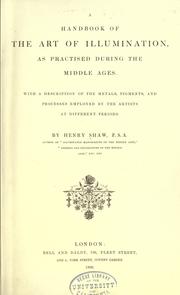
- A handbook of the art of illumination as practised during the middle ages
- An attempt at a concise history of Glamorgan
- "And there was a great calm"
- A letter to Lord Chancellor Cottenham upon the bill to give primary jurisdiction to the masters in ordinary of the High Court in certain cases
- Essays written in the intervals of business ...
- Spenser's Faerie queene
- A trampwoman's tragedy
- The life of Alexander Pope
- Address to the students of Harvard University
- An inquiry, concerning the author of the letters of Junius
- Chiswick Press keyboard typefaces
- Dante
- Arley in idleness
- Chiswick press
- Caxton's Tully Of old age and Friendship, 1481
- The mystical hymns of Orpheus
- Houses of Sin
- The interrupted wedding
- The empire of music and other poems
- Fables de Gay
- The fiddler's story ; A jingle on the times
- Carta constitucional da Monarchia portugueza, decretada, e dada pelo Rei de Portugal e Algarves D. Pedro, imperador do Brazil aos 29 de abril de 1826
- Selected Poems
- Travels in South Europe
Author data: Open Library