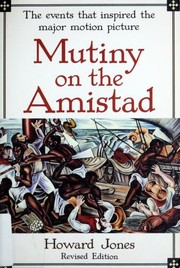
Mutiny on the Amistad
the saga of a slave revolt and its impact on American abolition, law, and diplomacy
Publisher description: This book is the first full-scale treatment of the only instance in history in which African blacks, seized by slave dealers, won their freedom and returned home. In 1839, Joseph Cinque led other blacks in a revolt on the Spanish slave ship, Amistad, in the Caribbean. They steered the ship northward to Montauk, Long Island, where it was seized by an American naval vessel. With the Africans jailed in Connecticut and the Spaniards claiming violation of their property rights, an international controversy erupted. The Amistad affair united abolitionists in the U.S. and England, drove the White House into almost any means to quiet the issue, and placed the U.S. and Spain in a confrontation that threatened to involve England and Cuba. The abolitionists, led by Lewis Tappan, Joshua Leavitt, and others, argued that equal justice was the central issue in the case.^ Appealing to natural law, evangelical arguments, and "moral suasion" in proclaiming slavery a sin, they sought to establish that all persons, black and white, have an inherent right of liberty and thereby hoped to erase the color line that formed the racial foundation of slavery. In their eyes, the mutiny o
For young readers
Book data: Open Library