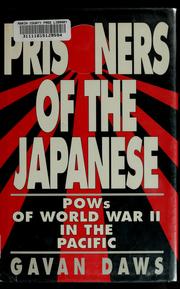
Prisoners of the Japanese
by Gavan Daws
In the first disastrous months following Pearl Harbor, the Japanese Army took over 140,000 Allied prisoners. More than one in four of these POWs died at the hands of their captors. They were denied medical treatment. They were starved. When the International Red Cross sent food and medicine, the Japanese looted the shipments. They sacrificed prisoners in medical experiments. They watched them die by the tens of thousands from diseases of malnutrition like beriberi, pellagra, and scurvy, and from the epidemic diseases of the tropics: malaria, dysentery, tropical ulcers, and cholera. Those who survived were slated to be worked to death. If the war had lasted another twelve months, there would not have been a POW left alive. Prisoners of the Japanese raises disturbing questions as well about the value placed on the lives of Allied POWs by their own supreme command. Of all military prisoners who died in the Japanese zone of captivity, more than one in four were killed by "friendly fire" ordered by General Douglas MacArthur. It is impossible not to be seized by the horror of the POWs' ordeal. But while the inhuman cruelty of the Japanese prison camps is documented exhaustively - beyond
For young readers
Book data: Open Library