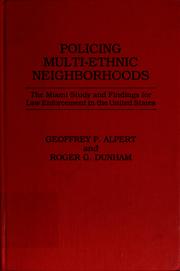
Policing multi-ethnic neighborhoods
Data from five Miami neighborhoods with different ethnic and socioeconomic characteristics formed the basis of an analysis of differences in police and citizen attitudes toward various police practices and the implications of these differences for policing. Data came from a middle-class black neighborhood, a government-subsidized housing project for low-income blacks, two neighborhoods with large numbers of Cuban immigrants from two different immigration periods, and a well-established Anglo middle-class and upper-middle-class area. Information was gathered from 220 community residents as well as from 451 high school students in neighborhood schools and 101 police officers. Citizens and students were asked about demographics, contacts with the police, and whether these contacts were positive or negative. Police were asked about their demographic characteristics and length of service in the police and the particular district. Findings showed that neighborhood residence has more influence than gender or ethnicity in explaining variations in attitudes toward policing. However, police in the different neighborhoods do not have differing styles of policing to match the unique characteri
For young readers
Book data: Open Library