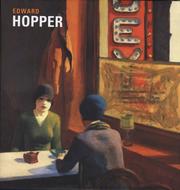
Edward Hopper
The creator of pictures that John Updike called "calm, silent, stoic, luminous, classic," Edward Hopper produced many works now considered icons of modern art. Canvases such as Drug Store, New York Movie, and the universally recognized (and often parodied) Nighthawks reshaped what painting looked like in America and devised a visual language for middle-class life and its discontents. This extensive new assessment of Hopper, which accompanies a major traveling exhibition, examines the dynamics of his creative process and discusses his work within the cutural currents of his day -- showing parallels not only with other painters but also with such media as literature and film. While most writers have tended to limit Hopper to being the great painter of alienation, this book takes a much broader, more nuanced, and ultimately more representative view of a highly complex, extremely varied artist. Spanning the entirety of Hopper's career, but with particular emphasis on his heyday in the twenties, thirties, and forties, Edward Hopper highlights his greatest achievements while discussing such topics as his absorbtion of European influences, critical reactions to his work, the relation of r
For young readers
Book data: Open Library