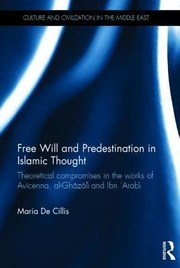
Free Will and Predestination in Islamic Thought Culture and Civilization in the Middle East
"The subject of "human free will" versus "divine predestination" is one of the most contentious topics in classical Islamic thought. By focusing on a theme of central importance to any philosophy of religion, and to Islam in particular, this book offers a critical study of the intellectual imports offered to this discourse by three key medieval Islamic scholars: Avicenna, Ghāzālī and Ibn Arabī"-- "The subject of "human free-will" versus "divine predestination" is one of the most contentious topics in classical Islamic thought. By focusing on a theme of central importance to any philosophy of religion, and to Islam in particular, this book offers a critical study of the intellectual contributions offered to this discourse by three key medieval Islamic thinkers: Avicenna, Ghāzālī and Ibn Arabī. Through investigation of primary sources, Free Will and Predestination in Islamic Thought establishes the historical, political and intellectual circumstances which prompted Avicenna, Ghāzālī and Ibn Arabī attempts at harmonization. By analysing the theoretical and linguistic 'techniques' which were employed to convey these endeavours, this book demonstrates that the three individuals were com
For young readers
Book data: Open Library