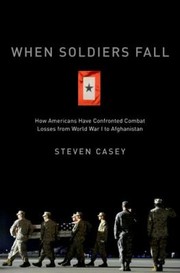
When Soldiers Fall How Americans Have Confronted Combat Losses From World War I To Afghanistan
by Steven Casey
"Call it the Vietnam Syndrome or Black Hawk Down blowback. It's the standard assumption that Americans won't tolerate combat casualties, that a rising body count lowers support for war. But that's not true, argues historian Steven Casey; even worse, this assumption damages democracy. Fearing a backlash, the military has routinely distorted its casualty reports in order to hide the true cost of war. When Soldiers Fall takes a new look at the way Americans have dealt with the toll of armed conflict. Drawing on a vast array of sources, from George Patton's command papers to previously untapped New York Times archives, Casey ranges from World War I (when the U.S. government first began to report casualties) to the War on Terror, examining official policy, the press, and the public reaction. Not surprisingly, leaders from Douglas MacArthur to Donald Rumsfeld have played down casualties. But the reverse has sometimes been true. At a crucial moment in World War II, the military actually exaggerated casualties to counter the public's complacency about ultimate victory. More often, though, official announcements have been unclear, out of date, or deliberately misleading--resulting in media
For young readers
Book data: Open Library