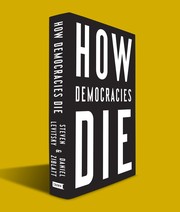
How Democracies Die
by Steven Levitsky, Daniel Ziblatt
Mutual tolerance and institutional forbearance are two unwritten democratic norms crucial for a healthy and stable democracy. Coined by Harvard political scientists Steven Levitsky and Daniel Ziblatt in their 2018 book How Democracies Die, they are considered essential "soft guardrails" that reinforce a country's constitutional rules. Mutual tolerance Mutual tolerance is the shared understanding that political rivals are legitimate and loyal citizens with an equal right to exist, compete for power, and govern. It is the willingness of politicians and the public to accept that opponents are not enemies, but legitimate participants in the democratic process. When mutual tolerance erodes, it can create a cycle of distrust where politicians may demonize their opponents and treat political defeat as an existential catastrophe. Examples: A sign of mutual tolerance: A candidate who loses an election publicly concedes and congratulates the winner, even if the results are disappointing. An erosion of mutual tolerance: In the U.S., increasing partisan polarization has led many to perceive the opposing party as an existential threat rather than a legitimate rival. Institutional forbearance In
For young readers
Book data: Open Library