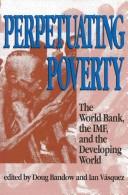
Perpetuating poverty
by Doug Bandow
Since World War II, it has been widely believed that underdeveloped countries cannot become prosperous without billions of dollars in aid from wealthy countries. Yet after 40 years, there is little to show for it. Perpetuating Poverty is an eye-opening review of the scandalous record of the World Bank and the International Monetary Fund. The startling findings include: India has received the most foreign aid of any country since 1951 - about $55 billion - but today 40 percent of its population lives in poverty; after two decades of development planning financed largely by the IMF and the World Bank, sub-Saharan Africa today has a lower per capita income than it did when the aid started; and while the industrial nations support foreign aid, they also maintain trade restrictions against poor countries that reduce those nations' incomes. As their failures have become undeniable, however, international aid agencies have only escalated their lending to historic levels. The International Monetary Fund plays a leading role in distributing Western aid to Russia, and membership in the IMF and World Bank is expanding. A new bank has been established for Eastern Europe; another is planned for
For young readers
Book data: Open Library