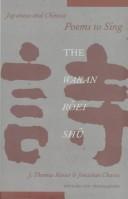
Japanese and Chinese poems to sing
by J. Thomas Rimer, Jinʼichi Konishi, Stephen Addiss, Ann Yonemura
This first English translation of the Wakan roei shu, includes two introductory essays, insightful commentaries on each passage, and three expositions, which discuss the collection's influence on Japanese literary history, music, and calligraphy. For centuries these short, evocative poems were memorized and cherished by Japanese courtiers who sang them at court, into lovers' ears, or at moments when spoken words failed to express their feelings. Until the Meiji Restoration (1868-1912), calligraphers, poets, and artists looked to the Wakan roei shu for inspiration, incorporating its text into many of Japan's most celebrated masterpieces, from the no play Takasago to the Tale of Genji and the calligraphy of Fujiwara no Yukinari, whose eleventh-century calligraphic interpretations of the collection were treasured by Japanese for centuries. The collection - arranged in accordance with the four seasons and covering more than forty topics, from celestial bodies to ministers of state - includes poems by some of the most beloved Chinese and Japanese masters, including Po Chu-i (772-846) and Sugawara no Michizane (845-903). Like haiku, the poems in the Wakan roei shu are brief and reflectiv
For young readers
Book data: Open Library