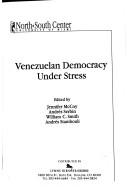
Venezuelan democracy under stress
Venezuela, widely regarded as a model of democratic consolidation and successful economic development in Latin America, has recently experienced severe stress in its socioeconomic and political order. Tensions became evident in the 1980s, but the crisis began in earnest in 1989 with the launching of a radical market-oriented economic stabilization program and ensuing political violence and social unrest. The seriousness of the crisis became evident with two abortive military coups in 1992 and the suspension of Carlos Andres Perez's presidential term in 1994. Venezuela's recent experience poses a major challenge to scholarly research on Latin American political and economic affairs. In contrast to the crisis of authoritarian rule and transitions to civilian governments, and the subsequent problems of the consolidation of a democratic regime, the problematic posed by the Venezuelan case entails the prospect of decay or deconsolidation of its long-established democratic institutions. The question is whether Venezuela's democracy can be renewed and revitalized or whether it will continue to deteriorate to the point of collapse or breakdown. North American and Venezuelan scholars examin
For young readers
Book data: Open Library