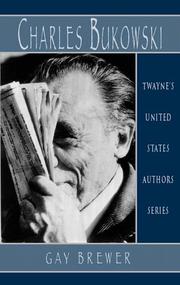
Apropos of his reputation as the underground poet, Charles Bukowski (1920-1994) developed a public persona of poseur, abusive performer, and violent curmudgeon. Bukowski's embrace of this self-aggrandizing image belies his dedication to the trade of writing. The poem was his lifeline to sanity, to immediate reclamation of daily events, and to the transformation of the mundane into the extraordinary. His poems, short stories, and novels, like the man himself, resist easy classification. Brilliantly intuitive in turning autobiographical material into art, Bukowski shares with Ernest Hemingway - whose influence Bukowski acknowledged - the central subject of the male psyche, a preoccupation with death, a heavy reliance on dialogue, and a marvelous linguistic economy. However, Bukowski consistently set himself apart by his use of humor - Hemingway's tragic fatalism recast as absurd black comedy. Bukowski's persistent focus on the working class and those on the fringes of society, his unrepentant use of drink and scatological idiom - these in the context of his assault on academe and shaped by his ribald and insouciant humor - set him apart stylistically, ideologically, and in the critic
For young readers
Book data: Open Library