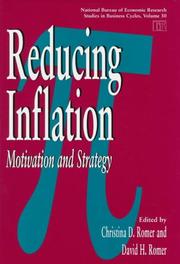
In this volume, sixteen distinguished economists analyze the appropriateness of low inflation as a goal for monetary policy and discuss strategies for reducing inflation. The authors investigate both day-to-day issues in the conduct of monetary policy and fundamental reforms of monetary institutions. Using a wide range of data and analytical techniques, these papers seek to answer important questions about the wisdom and methods of reducing inflation. Section I explores inflation's effects and costs. Essays in this section investigate the reasons that inflation causes so much unhappiness to ordinary people, the potentially large benefits of reducing inflation to zero through its impact on the tax system, and inflation's effects on the efficiency of the labor market and the equilibrium unemployment rate. Section II moves beyond the goals of policy to consider the obstacles facing central bankers. One essay investigates the accuracy and precision of statistical estimates of the natural rate of unemployment, which is a frequently used indicator in the formulation of monetary policy. Another essay considers possible explanations for what went wrong in the 1970s, the only peacetime peri
For young readers
Book data: Open Library