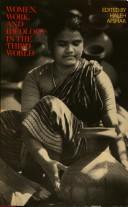
Women, work, and ideology in the Third World
by Haleh Afshar
One of the primary methodological innovations of feminist researchers has been an assertion of the validity and centrality of the life experiences of individual women. This perspective arose partly to compensate for the malestream concentration on abstract theoretical issues that have little direct reference to the life experiences of the vast majority. In the latter approach, people are measured and evaluated with reference to how they fit into elaborate theoretical frameworks. […] The articles that make up this collection came out of a series of meetings of the Women and Development study group of the Development Studies Association at the University of Liverpool. They are written in the format of case studies of the conditions, both social and economic, of women's work, in particular regions of the Third World. While they focus on specific problems - land rights or levels of fertility - the underlying agenda of the authors is to try to understand and explain the ways that ideology functions as a tool that shapes and legitimates women's subordinate status. All the articles discuss, though in different ways, how ideologies of male dominance underline not only traditional religious
For young readers
Book data: Open Library