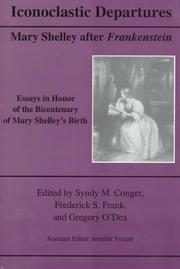
Iconoclastic departures
by Syndy M. Conger, Frederick S. Frank
Iconoclastic Departures contributes to the ongoing reevaluation of Mary Shelley as a professional author in her own right with a lifelong commitment to the development of her craft. Many of its essays acknowledge the importance of her family to her work - the steady theme of much earlier scholarship - but for them the family has become an imperative socio-psychological context within which to better understand her innovations in the many literary forms she worked with during her career: journals, letters, travelogues, biographies, poems, dramas, tales, and novels. The book's essays also convey the conviction that even if Mary Shelley, after Percy Shelley's death, gradually retired from public life as his relatives wished, she retained a resiliently resistant attitude toward many of the established orders of her day, easily recovered by a careful look beyond her "feelings" to the productions of her literary "imagination.". The Mary Shelley who inhabits this three-part collection of portraits is a radical, even if a quiet radical. Part 1 focuses on various moments in her construction of her authorial identity; parts 2 and 3 anatomize the nature of her resistance and her innovation. S
For young readers
Book data: Open Library