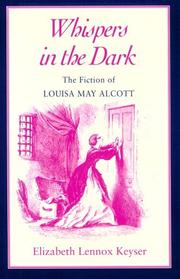
Whispers in the dark
For decades readers accepted Louisa May Alcott's sentimental portrayal of the domestic world of women and children as evidence of her wholehearted support of the conservative ideologies of Victorian America. The women's movement of the 1970s sparked a reexamination of Alcott's writings, revealing a more radical vein but failing to establish the extent to which this impulse was realized. In an effort to clarify Alcott's intent, Elizabeth Keyser examines representative works: the sensation stories "A Whisper in the Dark," "A Marble Woman," and "Behind a Mask"; the children's classics Little Women, Little Men, and Jo's Boys; and the novels for adults Moods, Work, and Diana and Persis. Keyser discerns in all three genres self-portraits or metafictions that convey what it meant to be a Victorian woman writer. Alcott's wealth of allusion to other writers, such as Charlotte Bronte, Margaret Fuller, and, especially, Nathaniel Hawthorne, and of recurring motifs such as textiles, texts, and theatricals reveals her consistent subversion of conventional values for women. Keyser shows that beneath the mildly progressive feminism of her domestic and children's fiction lurks the more radical femi
For young readers
Book data: Open Library