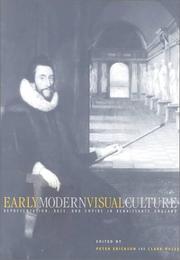
Early modern visual culture
by Peter Erickson, Clark Hulse
An interdisciplinary group of scholars applies the reinterpretive concept of "visual culture" to the English Renaissance. Bringing attention to the visual issues that have appeared persistently, though often marginally, in the newer criticisms of the last decade, the authors write in a diversity of voices on a range of subjects. Common among them, however, is a concern with the visual technologies that underlie the representation of the body, of race, of nation, and of empire. Several essays focus on the construction and representation of the human body - including an examination of anatomy as procedure and visual concept, and a look at early cartographic practice to reveal the correspondences between maps and the female body. In one essay, early Tudor portraits are studied to develop theoretical analogies and historical links between verbal and visual portrayal. In another, connections in Tudor-Stuart drama are drawn between the female body and the textiles made by women.^ A second group of essays considers issues of colonization, empire, and race. They approach a variety of visual materials, including sixteenth-century representations of the New World that helped formulate a cons
For young readers
Book data: Open Library