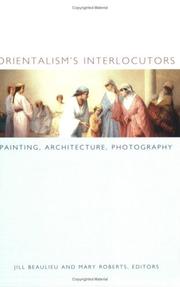
Orientalism's Interlocutors
by Jill Beaulieu, Mary Roberts, Zeynep Celik, Roger Benjamin, Deborah Cherry
"Until now, Orientalist art - exemplified by paintings of harems, slave markets, or bazaars - has predominantly been understood to reflect Western interpretations and to perpetuate reductive, often demeaning stereotypes of the exotic East. Orientalism's Interlocutors contests the idea that Orientalist art simply expresses the politics of Western domination and argues instead that it was often produced through cross-cultural interactions. Focusing on paintings and other representations of North African and Ottoman cultures, by both local artists and westerners, the contributors contend that the stylistic similarities between indigenous and Western Orientalist art mask profound interpretive differences, which, on examination, can reveal a visual language of resistance to colonization. The essays also demonstrate how marginalized voices and viewpoints - especially women's - within Western Orientalism decentered and destabilized colonial authority. Looking at the political significance of cross-cultural encounters refracted through the visual languages of Orientalism, the contributors engage with pressing recent debates about indigenous agency, postcolonial identity, and gendered subje
For young readers
Book data: Open Library