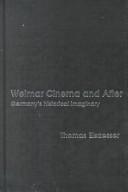
Weimar cinema and after
German cinema of the 1920s is still regarded as one of the 'golden ages' of world cinema. Films such as The Cabinet of Dr. Caligari, Dr. Mabuse the Gambler, Nosferatu, Metropolis, Pandora's Box and The Blue Angel have long been canonised as classics, but they are also among the key films defining Germany as a nation uneasy with itself. The work of directors like Fritz Lang, F. W. Murnau and G. W. Pabst - having apparently announced the horrors of fascism, while testifying to the traumas of a defeated nation - still casts a long shadow over cinema in Germany, leaving film history and political history curiously intertwined. Weimar cinema and after: Germany's historical imaginary offers a fresh perspective on this most 'national' of national cinemas, re-evaluating such labels as 'Expressionist film' and 'The new Sobriety' and even putting 'fascinating fascism' and film noir in a different, international context. Thomas Elsaesser questions the conventional readings which link these genres and movements solely to the legacy of German romanticism and nationalism, and offers new approaches to analysing the function of national cinema in an advanced 'culture industry'. Elsaesser reads the
For young readers
Book data: Open Library