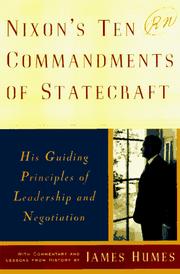
Nixon's ten commandments of statecraft
his guiding principles of leadership and negotiation
A shrewd bargainer with a visionary global outlook, Richard Nixon was a master of Cold War politics, from his infamous "Kitchen Debate" with Khrushchev in Moscow to his crucial decision to open relations with China. In a fascinating introduction that blends anecdotes about Nixon and original insight into his personality and politics, Humes notes that "vision, to Nixon, was knowledge of the past directed toward the future." Nixon was a politician, a statesman, and a historian; as a result, Humes is able to illustrate each maxim with a key example from Nixon's own career in diplomacy as well as an illuminating story from world history. The triumphs and failures of great leaders such as Pericles, Benjamin Franklin, and Winston Churchill are seen here through the prism of Nixon's timeless advice. An engaging and spirited storyteller, Humes captures the genius of a man who understood political power at its most sophisticated - and never hesitated to reach for it. From "Always Be Prepared to Negotiate, but Never Negotiate Without Being Prepared" to "Never Seek Publicity That Would Destroy the Ability to Get Results" to "Always Leave Your Adversary a Face-Saving Line of Retreat," the Ten
For young readers
Book data: Open Library