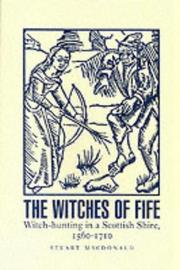
"Along the coast of Fife, in villages like Culross and Pittenweem, history records that some women were executed as witches. Still the reality of what happened the night that Janet Cornfoot was lynched at Pittenweem is hard to grasp as one sits by the harbour watching the fishing boats unload their catch and the pleasure boats rising with the tide. How could people do this to an old woman? Why was no-one ever brought to justice? And why would anyone defend such a lynching?" "The task of the historian is to try to make events in the past come alive and seem less strange. This is particularly true in the case of the historian dealing with the witch-hunt. The details are fascinating. Some of the anecdotes are strange. The modern reader finds it hard to imagine illness being blamed on the malevolence of a beggar women denied charity. It is difficult to understand the economic failure of a sea voyage being attributed to the village hag, not bad weather." "Witch-hunting was related to ideas, values, attitudes and political events. It was a complicated process, involving religious and civil authorities, village tensions and the fears of the elite. The witch-hunt in Scotland also took plac
For young readers
Book data: Open Library