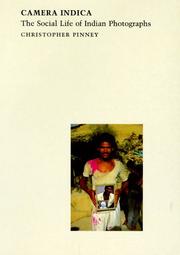
Camera Indica
"A wedding couple gazes resolutely out at the viewer from the wings of a butterfly, a commemorative portrait of a deceased boy surrounded by rose petals - such moving and quiet images represent the changing role of photographic portraiture in India, a topic Christopher Pinney explores in Camera Indica: The Social Life of Indian Photographs. Studying photographic practice as it is embedded in Indian society over the last 100 years, Pinney, an anthropologist, traces the various purposes and goals of photography through colonial and postcolonial times." "Pinney identifies three key moments In Indian portraiture: the use of photography as a quantifiable instrument of measurement under British rule, the role of portraiture in moral instruction, and the current visual style of popular culture and its effects on modes of picturing. Photographic culture thus becomes a mutable realm in which capturing likeness is only part of the project. Today, Indian images are characterized by a distinctive postcolonial photographic practice, which involves sophisticated inventiveness and techniques such as overpainting, collage, composite printing and doubling. Contemporary portraits that showcase these
For young readers
Book data: Open Library