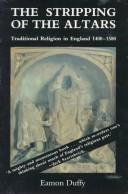
The stripping of the altars
traditional religion in England, c.1400-c.1580
by Eamon Duffy
This important and provocative book offers a fundamental challenge to much that has been written about the pre-Reformation church. Eamon Duffy recreates fifteenth-century English lay people's experience of religion, revealing the richness and complexity of the Catholicism by which men and women structured their experience of the world and their hopes within and beyond it. He then tells the powerful story of the destruction of that Church - the stripping of the altars - from Henry VIII's break with the papacy until the Elizabethan settlement. Bringing together theological, liturgical, literary, and iconographic analysis with historical narrative, Duffy argues that late medieval Catholicism was neither decadent nor decayed but was a strong and vigorous tradition, and that the Reformation represented the violent rupture of a popular and theologically respectable religious system. The first part of the book reviews the main features of religious belief and practice up to 1536. Duffy examines the factors that contributed to the close lay engagement with the structures of late medieval Catholicism: the liturgy that was widely understood even though it was in Latin; the impact of literacy
For young readers
Book data: Open Library