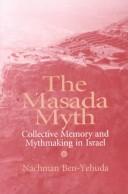
Masada myth
In 73 A.D., legend has it, 960 Jewish rebels under siege in the ancient desert fortress of Masada committed suicide rather than surrender to a Roman legion. Recorded in only one historical source, the story of Masada was obscure for centuries. In The Masada Myth, Israeli sociologist Nachman Ben-Yehuda tracks the process by which Masada became an ideological symbol for the State of Israel, the dramatic subject of movies and miniseries, a shrine venerated by generations of Zionists and Israeli soldiers, and the most profitable tourist attraction in modern Israel. Ben-Yehuda describes how, after nearly 1800 years, the long, complex, and unsubstantiated narrative of a Romanized Jew, Josephus Flavius, was edited and augmented in the twentieth century to form a simple and powerful myth of heroism. Ben-Yehuda looks at the ways this new mythical narrative of Masada was created, promoted, and maintained by pre-state Jewish underground organizations, the Israeli army, archaeological teams, mass media, youth movements, textbooks, the tourist industry, and the arts. He discusses the various organizations and movements that created "the Masada experience" (usually a ritual trek through the Jude
For young readers
Book data: Open Library