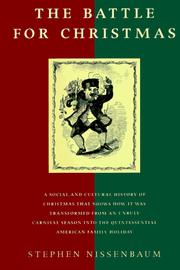
Americans who complain about the modern-day commercialization of Christmas may be surprised to discover that dissatisfaction with the way the holiday has been observed is by no means a new phenomenon. In 1659 the Massachusetts General Court declared the celebration of Christmas to be a criminal offense. What the Puritans were trying to suppress was a season of excess rooted in the ancient agricultural cycle - rowdy public displays of eating and drinking, mockery of established authority, aggressive begging, and boisterous invasions of the homes of the wealthy. In The Battle for Christmas, Stephen Nissenbaum shows how in the early nineteenth century, with the growth of cities, these Christmas-season carnival revels became even more threatening as they turned into gang violence and even riots. . Attempting to get Christmas out of the streets, a group of New Yorkers - Washington Irving among them - led a movement to transform it into a new style of celebration that would take place within the secure confines of the family circle, and be concerned especially with the happiness of children. We learn how two classic texts helped refashion the holiday: Clement Clarke Moore's "A Visit from
For young readers
Book data: Open Library