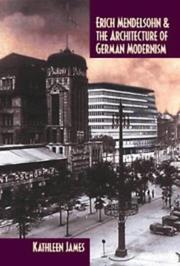
Erich Mendelsohn and the architecture of German modernism
Erich Mendelsohn's buildings, erected throughout Germany between 1920 and 1932, epitomized architectural modernity for his compatriots. In this study, Kathleen James examines Mendelsohn's department stores, office buildings, and cinemas, the downtown counterparts to the famous housing projects built during the same years in Frankfurt and Berlin. Demonstrating the degree to which these buildings' dynamic presence stemmed from Mendelsohn's attention to their consumer-oriented functions, James shows Mendelsohn to be more than an Expressionist, as he is usually characterized. James recounts how his architecture closely reflected the controversies over modernity, including relativity, consumerism, and urban planning, that raged during the years of the Weimar Republic. She also illustrates how much Mendelsohn's thriving practice depended on the patronage of his fellow German Jews, many of whom shared his commitment to creating alternatives to the nationalistic historicism of the late Wilhelmine period.
For young readers
Book data: Open Library