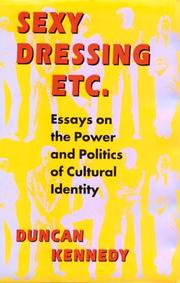
Sexy dressing, etc
Radicalism after Communism? In the United States of America, where even liberalism is under deep suspicion? And what can a privileged white male have to say about it, after the civil rights and women's movements? In this book, Duncan Kennedy argues that an American radicalism is both possible and desirable. One base for radical politics is the big institutional workplace, where multicultural coalitions around issues like affirmative action can upset frozen hierarchies. But another is popular culture - whence his emphasis on phenomena like sexy dressing. Law provides the background for all kinds of group struggles, Kennedy argues, and law is never neutral. This theme of Critical Legal Studies (Kennedy is one of its founders) runs throughout the book. He shows how legal rules tilt the playing field, making it look as though oppressively unequal outcomes are just what everyone deserved. Cultural identity is one of Kennedy's main concerns. He provides a new "postcolonial" reading of American national character as well as responses to black liberation theory and radical feminism. Kennedy asserts that cultural identity is contingent and fluid, at the same time that it is inescapable, and
For young readers
Book data: Open Library