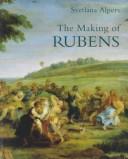
The making of Rubens
Rubens has long been considered a remarkably successful, prolific, and fleshly painter, a frequenter of the courts of the great. He is more admired than loved in our time, in contrast to the troubled figure of Rembrandt. This book takes up basic questions about Rubens's art and life, studies two of his bacchic paintings in detail, and discovers him in a less easy and more identifiably modern predicament. The first problem Alpers addresses is one of the relationship between making art and national consciousness. Why and how did Rubens paint the revelling Flemish peasants in the great Louvre Kermis? The circumstances, tone, and feeling of this picture are investigated and found to involve deep ambivalences that are political, social, and aesthetic. The second problem is that of art and its consumption. Beginning with Watteau, the making of a Rubensian art is traced in the taste for Rubens in the eighteenth century in France, where many of the pictures he had kept for his own collection had found their way. In the writings of Roger de Piles and in the work of the painters to follow, art is made out of the viewing and discussing of art. A binary system of taste emerged for Rubens as co
For young readers
Book data: Open Library