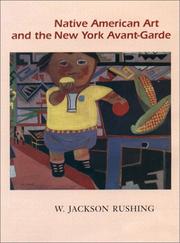
Native American art and the New York avant-garde
Avant-garde art between 1910 and 1950 is well known for its use of "primitive" imagery, often borrowed from traditional cultures in Africa and Oceania. Less recognized, however, is the use United States artists made of Native American art, myth, and ritual to craft a specifically American Modernist art. In this groundbreaking study, W. Jackson Rushing comprehensively explores the process by which Native American iconography was appropriated, transformed, and embodied in American avant-garde art of the Modernist period. Writing from the dual perspectives of cultural and art history, Rushing shows how national exhibitions of Native American art influenced such artists, critics, and patrons as Marsden Hartley, John Sloan, Mabel Dodge Luhan, Robert Henri, John Marin, Adolph Gottlieb, Barnett Newman, and especially Jackson Pollock, whose legendary drip paintings he convincingly links with the curative sand paintings of the Navajo. He traces the avant-garde adoption of Native American cultural forms to anxiety over industrialism and urbanism, post-World War I "return to roots" nationalism, the New Deal search for American strengths and values, and the notion of the "dark" Jungian unconsc
For young readers
Book data: Open Library