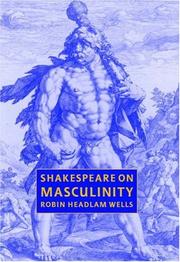
Shakespeare on masculinity
"Masculinity was a political issue in early modern England. Phrases such as 'courage-masculine' or 'manly virtue' took on a special meaning. As used by members of the Sidney-Essex faction, and later by admirers of the bellicose young Prince of Wales, they signified commitment to the ideals of militant Protestantism, Diplomacy and compromise were disparaged as 'feminine'." "Shakespeare on Masculinity is an important and original study of the way Shakespeare's plays engage with a subject that provoked bitter public dispute. Robin Headlam Wells argues that Shakespeare took a sceptical view of the militant-Protestant cult of heroic masculinity. Following a series of portraits of the dangerously charismatic warrior-hero, Shakespeare turned at the end of his writing career to a different kind of leader. If the heroes of the martial tragedies evoke a Herculean ideal of manhood, The Tempest portrays a ruler who, Orpheus-like, uses the arts of civilization to bring peace to a divided world. Other plays receiving close readings include Henry V, Troilus and Cressida, Hamlet, Othello, Macbeth, and Coriolanus."--Jacket.
For young readers
Book data: Open Library