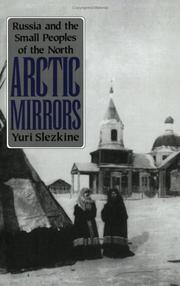
Arctic mirrors
"And, sovereign, having captured a shaman in battle, we asked him: what kind of man are you and do you have kinsmen? And he said: I am the best man of the Shoromboiskii clan and I have four sons. And so we kept him as hostage.". For over five hundred years the Russians have been wondering what kind of people their Arctic and sub-Arctic hostages were. "They have mouths between their shoulders and eyes in their chests," reported a fifteenth-century tale. "They rove around, live of their own free will, and beat the Russian people," complained a seventeenth-century Cossack. "Their actions are exceedingly rude. They do not take off their hats and do not bow to each other," huffed an eighteenth-century scholar. They are "children of nature" and "guardians of ecological balance," rhapsodized early nineteenth-century and late twentieth-century romantics. Even the bolsheviks, who categorized the circumpolar foragers as authentic proletarians," were repeatedly puzzled by the "peoples ... from the late Neolithic period who, by virtue of their extreme backwardness, cannot keep up either economically or culturally with the furious speed of the emerging socialist society." . Whether described as
For young readers
Book data: Open Library