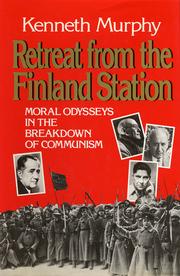
Retreat from the Finland Station
In 1940, when Marxism seemed at its apex as a moral and political force, Edmund Wilson published To the Finland Station, his landmark work on the growth of the socialist idea from Vico and Michelet to Lenin's triumphant return to Russia in a sealed train. Picking up where Wilson left off, Kenneth Murphy, in this sweeping historical investigation, follows the decline of Marxism from the beginning of the Revolution in October 1917, through its demise in the myriad revolutions of Eastern Europe in November 1989 and the failed putsch against Mikhail Gorbachev of August 1991. This breakdown, as he shows, arose from the conviction that liberty and state control would be natural partners in the new utopian order. This belief fatally persuaded socialism's adherents that state violence could be tolerated, even managed, in the name of revolutionary change. In examining the lives of leading revolutionaries - Nicolai Bukharin, Milovan Djilas, Imre Nagy, and Alexander Dubcek - and writers - Andre Gide, Arthur Koestler, Ignazio Silone, and even the young Alexander Solzhenitsyn - who became prisoners rather than masters of the bloodshed their adherence to socialism seemed to unleash, Murphy revea
For young readers
Book data: Open Library