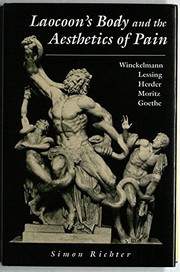
Laocoon's body and the aesthetics of pain
Before the sixteenth century, no one had seen the Greek statue, the Laocoon, since antiquity, but popular aesthetic judgment insisted that it was an ideal work of art, the unapproachable model for imitation and aspiration. When in 1506 a vintner found the statue just outside Rome, the contradiction between the ideal and the reality was readily apparent; the statue depicted not a vision of beauty, but the representation of a body in pain. Since the eighteenth century, the Laocoon has been at the crux of German aesthetics. Laocoon's Body and the Aesthetics of Pain examines the writings of Winckelmann, Lessing, Herder, Moritz, and Goethe, and seeks to discover what drew these theorists of classical beauty to the statue's representation of pain. The book examines the contradictions in and between their respective understandings of the Laocoon. Taking his cue from the original texts, Richter sets the primary aesthetic discourse against the foil of the unexpected discourse networks. His reading of Winckelmann unfolds against the eighteenth-century culture of castrati. He shows Herder and Goethe winning important insights from the physiological experiments of Albrecht von Haller. In every
For young readers
Book data: Open Library