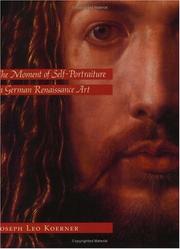
The Moment of Self-Portraiture in German Renaissance Art
The self-portrait has become a model of what art is: the artwork is the image of its maker, and understanding the work means recovering from it an original vision of the artist. In this ground-breaking work, Joseph Leo Koerner analyzes the historical origin of this model in the art of Albrecht Durer and Hans Baldung Grien, the first modern self-portraitist and his principal disciple. By doing so, he develops new approaches to the visual image and to its history in early modern European culture. Koerner establishes the character of German Renaissance art by considering how Durer's and Baldung's pictures register changes in the status of the self during the sixteenth century. He contends that Durer's self-portrait of 1500, modeled after icons of Christ, reinvented art for new conditions of piety, labor, patronage, and self-understanding at the eve of the Reformation.^ So foundational is this invention to modern aesthetics, Koerner argues, that interpreting it takes us to the limits of traditional art-historical method. Self-portraiture becomes legible less through a history leading up to it, or through a sum of contexts that occasion it, than through its historical sight-line to the
For young readers
Book data: Open Library