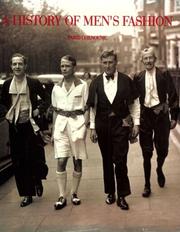
A History of Men's Fashion is divided into four parts that follow the sartorial evolution of the male wardrobe from the era of Beau Brummell, which created the model of the gentlemen and the dandy, to the "anti-fashion" trends of the early 1990s. Part One (1760-1850) traces the era of tails and the frock coat, the emergence of the pantaloon and the influence of Anglomania on European fashion. Men's fashion in Europe's fin de siecle climate, and the impact of ready-made garments are discussed in Part Two (1850-1914). Part Three (1914-1940) introduces the aesthetic of the sweater and the variations on the suit and vest as part of the post-World War I moral liberation and economic euphoria, and traces changes all the way through to the New Deal and the new American elegance. The post-World War II fashion revolution is described in Part Four (1940-1990) from zoot suits, spurred by the black American jazz scene, to London's Mod fashion of the 60s, Pierre Cardin and the new French style, the emergence of Italian chic, and the hippie and punk styles of the 70s. The book is completed by a perceptive discussion of contemporary designers such as Jean-Paul Gaultier, Giorgio Armani, Ralph Laur
For young readers
Book data: Open Library