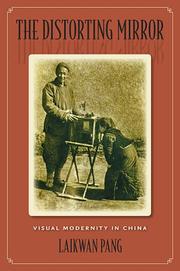
The distorting mirror
Visual Modernity in China
by Laikwan Pang
"The Distorting Mirror analyzes the multiple and complex ways in which urban Chinese subjects saw themselves interacting with the new visual culture that emerged during the turbulent period between the 1880s and the 1930S. The media and visual forms examined include lithography, photography, advertising, film, and theatrical performances. Urbanites actively engaged with and enjoyed this visual culture, which was largely driven by the subjective desire for the empty promises of modernity - promises comprised of such abstract and fleeting concepts as the new, exciting, and fashionable." "Detailing and analyzing the trajectories of development of various visual representations, Laikwan Pang emphasizes their interactions. In doing so, she demonstrates that visual modernity was not only a combination of independent cultural phenomena, but also a partially coherent sociocultural discourse whose influences were seen in different and collective parts of the culture.^ The work begins with an overall historical account and theorization of a new lithographic pictorial culture developing at the end of the nineteenth century and an examination of modernity's obsession with the investigation of
For young readers
Book data: Open Library