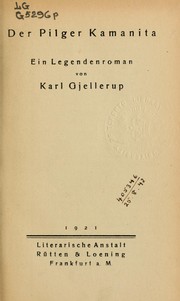
<p>Late one night, as he seeks shelter in a potter’s entrance hall, Kamanita meets an old ascetic. Encouraged by the monk, he relates the story of his life so far: how, born the son of an Indian merchant, he follows in his father’s footsteps; how, on his first trading trip, he meets and loses his great love Vasitthi; how he builds up a fortune and raises a family; and how one day he leaves everything behind to set on a pilgrimage. But the old monk is not who he seems, and when Kamanita refuses to accept his teachings, the consequences are startling and irreversible. What follows is a colorful, bewildering, revelation-filled journey through the past, present, and the Paradise of the West.</p> <p>Sixteen years before <a href=" Hesse</a> published <a href=" there was another European writer who used Buddhism as a source of inspiration for a novel. After earlier naturalistic works such as <i>Minna</i> and <i>Germanernes Lærling</i> (The German Apprentice), <i>The Pilgrim Kamanita</i> was a stylistic turning point for the Dane <a href=" Gjellerup</a>. It became a worldwide success, and his subsequent novels would touch on Buddhism as well.</p>
For young readers
Book data: Open Library