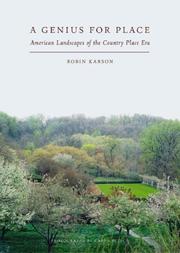
A Genius for Place
by Robin Karson
"In this lavishly illustrated volume, Robin Karson traces the development of a distinctly American style of landscape design through an analysis of seven country places created by some of the nation's most talented landscape practitioners." "In the mid-nineteenth century Frederick Law Olmsted, the designer of New York's Central Park, developed an approach to landscape design based on the principles of the English Picturesque which also emphasized a specifically American experience of nature and scenery. After Olmsted's retirement in 1897, these precepts continued to ground a new generation of American landscape architects through the next four decades, a period known as the "country place era," a time of rapid economic, social, and cultural change." "In the early twentieth century, new fortunes made it possible for wealthy Americans to commission country estates as a means of aggrandizing social status.^ These private havens also offered their owners respite from crowded cities and a way to preserve and celebrate places of distinctive landscape beauty. The commissions provided burgeoning numbers of landscape architects with opportunities to experiment with stylistic influences deri
For young readers
Book data: Open Library