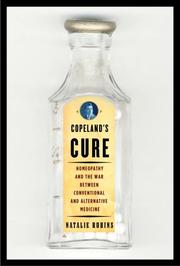
Copeland's Cure
Today, one out of every three Americans uses some form of alternative medicine, either along with their conventional ("standard," "traditional") medications or in place of them. One of the most controversial--as well as one of the most popular--alternatives is homeopathy, a wholly Western invention brought to America from Germany in 1827, nearly forty years before the discovery that germs cause disease. Homeopathy is a therapy that uses minute doses of natural substances--minerals, such as mercury or phosphorus; various plants, mushrooms, or bark; and insect, shellfish, and other animal products, such as Oscillococcinum. These remedies mimic the symptoms of the sick person and are said to bring about relief by "entering" the body's "vital force." Many homeopaths believe that the greater the dilution, the greater the medical benefit, even though often not a single molecule of the original substance remains in the solution.In Copeland's Cure, Natalie Robins tells the fascinating story of homeopathy in this country; how it came to be accepted because of the gentleness of its approach--Nathaniel Hawthorne and Henry Wadsworth Longfellow were outspoken advocates, as were Louisa May Alcot
For young readers
Book data: Open Library