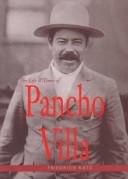
The Life and Times of Pancho Villa
The definitive biography of a Mexican revolutionary reckoned a monster by some, a hero by many more. Francisco Villa’s origins, writes University of Chicago historian Katz (The Ancient American Civilizations, 1972), have long been obscured in legend; Villa himself gave differing accounts of his rise. The sources seem to agree, however, that Villa was a minor bandit who managed through canny self-promotion to remake himself, as American president Woodrow Wilson put it, into “a sort of Robin Hood [who] had spent an eventful life in robbing the rich in order to give to the poor.” Katz places Villa’s rise to revolutionary leadership in the context of social unrest in 19th-century northern Mexico, when the comparatively wealthy state of Chihuahua attempted to break away from the rule of Mexico City, precipitating a nationwide power struggle. At the beginning of that revolution, Katz discovers, Villa had been working as a muleteer for an American mining company and was locally renowned for his knowledge of cockfighting; his chief ambition seems to have been to set up a butcher shop in the capital city. Instead, Villa took advantage of the unrest to raise an army to wage war against natio
For young readers
Book data: Open Library