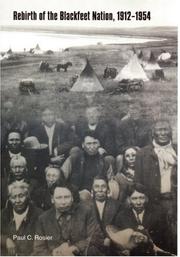
Rebirth of the Blackfeet Nation, 1912-1954
"Drawing on interviews, democratic theory, and extensive archival research, Paul C. Rosier tells the story of the Blackfeet Nation during the first half of the twentieth century. At the turn of the century, the Blackfeet, like many Native groups, were suffering from the cultural and economic effects of land loss, poverty, forced education at federal boarding schools, and overt political control by the federal government. By midcentury, however, the Blackfeet Nation had undergone a rapid and complex political and economic transformation. The Blackfeet embraced and largely benefited from the Indian Reorganization Act of 1934, which promoted tribal sovereignty and administration and halted land loss. The Blackfeet Tribal Business Council became a powerful force both on and off the reservation, and a class system emerged, consisting of wealthy Blackfeet ranchers and oil lessees, the very poor, and a middle class whose fortunes were tied to government and tribal credit programs for livestock, farm, and rehabilitation loans.". "How and why did these changes happen? Focusing on the internal political, economic, and ethnic forces shaping the Blackfeet Nation - and incorporating Blackfeet v
For young readers
Book data: Open Library