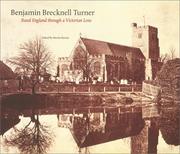
Benjamin Brecknell Turner
In the early 1850s, Benjamin Brecknell Turner (1815–1894) photographed picturesque, quintessentially English scenes: ruined abbeys and castles, thatched barns and half-timbered houses, crumbling cottages, ancient oak trees and woodland paths. His poetic images reveal the rough-hewn beauty of rustic subjects and the moral worth of tradition, nature, and rural life and labor. Nearly all of the works are drawn from one magnificent album, Photographic Views from Nature, assembled by the artist in 1854 or 1855 and passed down in his family until it was acquired by London's Victoria and Albert Museum in 1982.Turner, who was born in London in 1815 and entered the family candle and saddle soap business at the age of sixteen, first took up photography in 1849, when the medium was barely a decade old. Like many early practitioners, he was a "gentleman amateur" for whom photography was a passion, not a profession, so he made only a few prints of each image.^ Photographic Views from Nature constitutes the richest group of Turner's rare surviving prints.The album opens with two views of the Crystal Palace, Joseph Paxton's vast iron-and-glass pavilion built for the "Great Exhibition of the Works
For young readers
Book data: Open Library