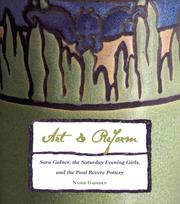
Art & reform
The handmade ceramics of the Paul Revere Pottery, often enlivened with stylized images of animals, flowers or abstract patterns, are best known today by the name of the girls' club whose members created the wares: the Saturday Evening Girls (SEG). Local reformers organized this club in 1899 to provide cultural activities for young Italian and Jewish immigrants of Boston's North End. Under the guidance of designer and illustrator Edith Brown, and as a way of helping with difficult family finances, the group soon turned to crafts. Before long, SEG ceramics had caught on, and were being sold through department stores in cities throughout the Eastern United States; though their success was largely curtailed by World War I, the pottery continued to operate until 1942. Today, SEG ware is highly collectible. Art and Reform offers a briskly written, handsomely illustrated introduction to this episode in Boston's cultural history, discussing the role of the SEG club in the life of the city's immigrant community and its ties to education reform and the Arts and Crafts movement. The book presents some 50 examples of the ceramics themselves, mostly by Sara Galner, one of the group's most gifte
For young readers
Book data: Open Library