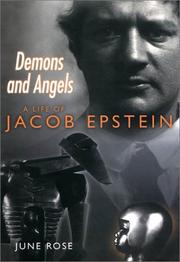
"Jacob Epstein had a vision. "I feel that I can do the best, most profound things and life is short," he wrote when he was thirty, and wished that he "was living in an age when man wanted to raise temples to man or God or the Devil." Time would prove Epstein's artistic talents to be as grand as his creative passion. His powerful and often explicit sculptures, monumental in their scale, would eventually define and indeed epitomize his age - but only after years of controversy during which his work was criticized, condemned, and sometimes destroyed.". "While Epstein is now recognized as a seminal figure in the history of twentieth-century art - a Modernist who was the first sculptor to carve directly in stone since the Middle Ages - the genius of his work in the early 1900s was recognized by only a few contemporary figures like Ezra Pound and Augustus John. Among the art establishment his work for the most part aroused hostility and censoriousness. So it was that Epstein endured the public scandals created by the nudity of his so-called Strand Statues (1907-1908; destroyed 1937) and by the debauched-looking naked angel that commanded his 1912 memorial for Oscar Wilde - but three deca
For young readers
Book data: Open Library